Event Overview & History
You are here:
- Home
- Event Overview & History
About The Reno Tahoe Odyssey
The Reno-Tahoe Odyssey Relay Run Adventure (RTO) is a 178-mile journey unlike any other—an unforgettable relay that begins in Reno, travels to the shores of Lake Tahoe, and loops back to the Biggest Little City in a breathtaking tour of the entire region. The race starts at the J Resort Festival Grounds and follows the Truckee River through downtown Reno before climbing into the Sierra Nevada and passing through Truckee, Tahoe City, South Lake Tahoe, Genoa, Carson City, and Virginia City. Teams complete the full circuit by racing back to Reno to cross the finish line.
The RTO course is divided into 36 legs, averaging about 5 miles each, offering a mix of challenge, camaraderie, scenery and pure adventure.
Start times on Friday are staggered between 6:30 a.m. and 4:00 p.m., based on each team’s estimated overall time. Slower teams head out first to ensure everyone finishes within a similar window, while the fastest teams launch later in the day.
Teams may include up to twelve (12) runners, the ideal number for covering the 36 legs with each person running three times. Ultra teams with six or fewer runners are welcome for those seeking an even bigger challenge.
The Reno-Tahoe Odyssey is truly the most fun you will ever have running! The RTO is a spectacular, one-of-a-kind route filled with stunning scenery, rich history, and nonstop team energy. It’s an adventure you’ll never forget.
Event History
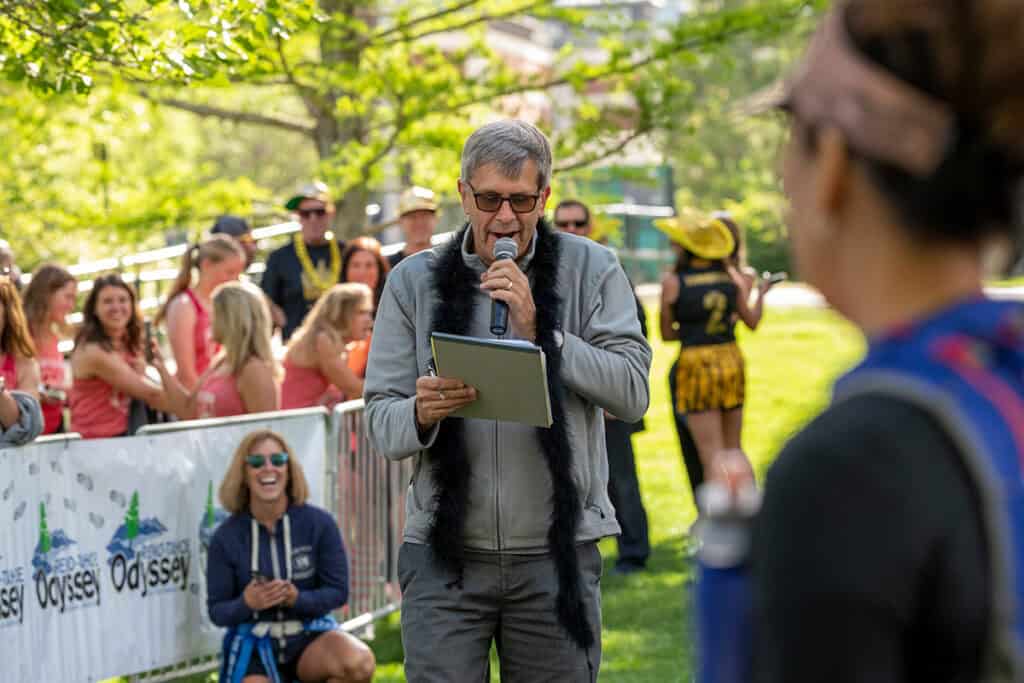
In 2003, Eric Lerude, a Reno native and runner enthusiast, ran in his first Hood To Coast Relay. The experience spurred Eric to think about creating a relay run event that showcased the Reno-Tahoe region. Eric’s wife Stephanie agreed with his vision and he started planning a 178-mile loop around the area.
In 2005, the inaugural Reno-Tahoe Odyssey Relay Run Adventure (RTO) occurred with about 36 teams and 400 runners. The RTO became a big hit with runners from near and far, and has continued to be one of the most popular events in the Reno-Tahoe region.
In 2022 Eric and Stephanie sold the RTO and the rest of their running events and race production company to Matt and Aimee Balzer, owners of Reno Running Company.
History Along The Course
Many interesting historic events have occurred along the Reno-Tahoe Odyssey course. Here is a summary of some of the happenings:
Leg 1
- This leg starts along and follows the Truckee River. The Washoe Indians inhabited this region for generations and lived in part on the large native cutthroat trout that they fished from this river and the Nevada desert lake where the river ends, Pyramid Lake. When Western Explorer John Fremont first saw this river in 1844, he named it the “Salmon Trout River” because the large cutthroat trout reminded him of the salmon in the Columbia River. Grateful pioneers renamed the river after a friendly Paiute Indian chief known as Truckee who guided them to this river after crossing the long, dry Nevada desert and who guided them safely over the nearby Sierra Nevada mountain range.
- This leg follows parts of the Truckee River route of the California Emigrant Trail. The California Emigrant Trail was used by over 200,000 westward bound emigrants and gold seekers heading to the rich farmlands and gold fields of California in the 1840’s and 1850’s. This was the greatest mass migration in American History. The first emigrants who used this route were the Stephens party. They successfully passed through and over the mountains. The most infamous users of the Truckee River route were the Donner party of 1846. 40 of the 87 party members died of starvation-related causes when they were trapped at Donner Lake by heavy snows during the winter.
Leg 2
- This leg continues along the Truckee River route of the California Emigrant Trail. There is a trail marker at the eastern end of Mayberry Park just off the pathway.
- This leg also crosses and travels next to the Union Pacific Railroad tracks, which are set in the path of where the original transcontinental railroad was built in the late 1860’s. The “Big Four” of Leland Stanford, Mark Hopkins, Collis Huntington and Charles Crocker played major roles in the building of that railroad. So did Theodore Judah, who does not get as much credit for the monumental accomplishment of building that railroad. They all passed through here back at that time.
- This leg travel along the path of the Lincoln Highway. This road was America’s first transcontinental highway, conceived in 1913. It later was called U.S. Highway 40, and after that was replaced by the current day Interstate 80. The old adage of “if it’s not broken, don’t fix it” applied here. This route proved to be a direct way to cross the country for the pioneers using wagons. The first transcontinental railroad followed suit. So when it came time to build the first road across America for automobiles, the same route was chosen again. All came right through here, within yards of each other and the Truckee River.
Leg 3
- This leg continues along the Truckee River route of the California Emigrant Trail.
- Where it crosses the Truckee River near the Verdi Elementary School, the Crystal Peak toll bridge was subsequently located there.
- Just south are the railroad tracks. Not far from Verdi is the location where the first train robbery in the West occurred in 1870.
- It continues on what was the Lincoln Highway.
Leg 4
- This leg re-crosses the Truckee River where the Crystal Peak toll bridge was located and passes by the Crystal Peak cemetery.
- It continues along the Truckee River route of the California Emigrant Trail. There are trail markers along Henness Pass Road. These were the last miles traveled by some members of the Donner Party.
Leg 6
- This leg passes Boca Reservoir and crosses the Truckee River. At this location there existed a thriving town in the late 1800’s called Boca. It began as a work camp for the construction of the transcontinental railroad. Due to the cold temperatures, Boca was a natural place for the commercial ice cutting trade. In those days, there was a great demand for clear, cold mountain ice. Many ice companies operated in this area and produced ice that was used to ship fresh California produce around in the country. There also was a brewery here that made Boca Beer, one of the most popular beers in the U.S. in the 1880’s and served at the World’s Fair in Paris in 1883.
Leg 8
- This leg travels aside the railroad tracks where the transcontinental railroad was built.
- Parts of this leg travel on what was the Lincoln Highway.
- This leg passes through historic Truckee, California. This town was founded in approximately 1866 and known as Pollard’s Station. It became a boom town in the late 1860’s due to the construction of the transcontinental railroad. Many Chinese laborers were used to build the railroad, leading to what was then the second largest Chinatown on the Pacific Coast. There were many mills nearby that harvested timber for trestles, ties, and fuel for wood burning locomotives, as well as for the mine shafts in the silver mines in Virginia City and the flumes that transported water around the area. In 1868 it was renamed for Paiute Indian Chief Truckee. Nearby at Donner Lake is a museum that tells the story of the Donner Party and other emigrants who passed through here on their way across the Sierra Nevada.
Leg 10
- Squaw Valley Ski Resort hosted the 1960 Winter Olympic Games. That was the first Winter Olympics when the U.S. hockey team beat the Soviets.
Leg 11
- This leg travels along the Truckee River Bike Path, which traces the route of the narrow gauge railway from Truckee to Tahoe City. San Francisco’s elite took the one hour train ride along this route as part of their journey to Lake Tahoe between the 1880’s and 1920’s. The railway ended on the huge Tahoe Tavern pier in Tahoe City. From there the 169 foot Steamer Tahoe transported guests to Lake Tahoe’s posh resorts around the lake, including McKinney’s (now Chamber’s Landing), Baldwin’s Tallac House and the Glenbrook Inn.
Legs 12-18
- In 1844 John Fremont was the first white man to discover Lake Tahoe. In 1861 Mark Twain, then a newspaperman working in Virginia City, described Lake Tahoe as the “fairest picture the whole earth affords.”
Legs 13-16
- These legs pass many estates that are now California state parks, including the Ehrman Mansion built in 1901-1903 and located in Sugar Pine Point State Park and the Vikingsholm castle built in 1929 and located along the shores of Emerald Bay.
Leg 17
- This leg passes the Tallac Historic Site, where you can tour the Baldwin Estate, Pope Estate and Valhalla Estate homes, and historic Camp Richardson.
Leg 18
- The Reno-Tahoe Odyssey is not the first long distance relay run to travel through these parts at all hours of the day and night. The Pony Express, a relay of mail by horses and riders that ran day and night, traveled through these parts back in 1860 and 1861. The Pony Express was created in April 1860 to provide the fastest mail delivery between St. Joseph, Missouri and Sacramento, California. The 2000 mile course had 165 stations. New riders took over every 75 to 100 miles. Fresh horses were used every 15 miles. But with the completion of the telegraph in October 1861, the Pony Express became obsolete and was finished.
Legs 19-21
- These legs climb out of the Lake Tahoe Basin and then descend the famous Kingsbury Grade. The original Kingsbury Grade, which is nearby, was a toll road in 1860 to 1868. This was the main road between Sacramento and Virginia City. The toll for a wagon and 4 horses was $17.50. In 1863 toll receipts totaled $190,000. That’s a lot of wagons passing through.
- The Pony Express followed this route.
Leg 22
- The town of Mottsville existed at the foot of the mountains here. It was one of the first settlements in Nevada. All that remains is a small cemetery east of the road.
- This leg ends in historic Genoa, which is Nevada’s first settlement dating back to 1851 (unless you ask someone from Dayton who may claim that it is Nevada’s first town). There are a number of museums here to enjoy, as well as Mormon State Park. You can also enjoy a drink at the oldest bar in Nevada, which is located at the main intersection.
- One of the most famous historic figures from this area is Snowshoe Thompson. He delivered mail between Genoa and Placerville. In the winter he traveled back and forth using long, wooden skis.
Leg 25
- This leg passes by the Stewart Indian School. This was a boarding school for children of local Washoe, Paiute and Western Shoshone Tribes where they were required to assimilate into the culture of the new residents of the region and United States. Many children were forced to attend and some never returned to their families. It was open from 1890 until 1980. It is listed in the National Registrar of Historic Places as a Historic District. The public may visit the cultural center and walk the trail around the 240 acre grounds.
Leg 25-27
- These legs travel through Carson City, which is Nevada’s capital city. It is named after Kit Carson, who was John Fremont’s scout. There are a number of museums here to enjoy, including the Nevada State Railroad Museum that houses locomotives and other artifacts from the Virginia & Truckee (V&T) Railroad, the famous railroad line that ran from Virginia City during the booming Comstock Lode era. You may also visit the Nevada State Capitol Building, one of the smallest capitol buildings in the United States. Leg 26 passes right by the front of this building.
Leg 28
- The V&T Railroad passed near here on its way to Virginia City. The V&T Railroad was known as the Queen of the Short Lines. This part was constructed in 1870 to deliver silver ore from Virginia City to the mills in Carson City.
Leg 29
- This leg passes through the Comstock Lode town of Silver City. At the end of this leg it passes through the narrow gorge known as Devil’s Gate. Thousands of adventurous souls paraded through this point as they made their way to the silver mines of the Comstock Lode.
Leg 30
- This leg passes through the Comstock Lode town of Gold Hill and crosses the tracks of the resurrected V&T Railroad. There is an ongoing project to continue the resurrected V&T Railroad all the way to Carson City.
- This leg reaches Virginia City, which was the center of the Comstock Lode silver boom days. Silver was discovered here in 1859. Millions of dollars were made here, some by men like James Flood and James Fair who owned mines and then built famous mansions and hotels on San Francisco’s Nob Hill. Mark Twain was a reporter for the Territorial Enterprise, Virginia City’s newspaper at that time. Virginia City is the United States’ largest historical monument. There is much to see here, from the inspiring churches and the Silver Terrace Cemetery to Piper’s Opera House, Mackay Mansion and the Bucket of Blood Saloon. As you walk along the main street, it is not difficult to imagine what things looked like back in the Comstock Lode days.
Leg 33
- This leg descends the famous Geiger Grade. The Old Toll Road, which was the original highway from the Truckee Meadows to the Comstock Lode established in 1862, runs in the canyon near the paved highway. Thousands of passengers and millions in precious cargo were transported on stages, wagons, and 10 mule freighters. Lurking highwaymen frequented the road too, at places like Robbers Roost and Deadman’s Point.
- Greg Lemond used this paved highway as one of his training ride routes. He holds the unofficial time record for climbing the highway on a bicycle.
Leg 35
- This leg travels by ranches that have been operating in the Truckee Meadows for generations. Enjoy the wide open pastures with lots of horses and cows.
- Near the end of this leg as you descend the north side of Windy Hill, you will pass the old Huffaker School House that dates back to 1867. This historic building is part of Bartley Ranch Regional Park.
Leg 36
- This leg travels through old southwest Reno. You will pass by Virginia Lake, a City of Reno park which was a public works project built in the 1930’s. You will pass some of Reno’s most historic mansions: the Redfield Mansion at 370 Mount Rose St.; the Mapes Mansion at 1501 S. Arlington Ave.; Lake Mansion at 250 S. Arlington Ave., which dates back to 1877; and the McCarran Mansion diagonally across from the Lake Mansion. You also will pass two of the “Spanish Quartet” elementary schools built in the early 1900’s. The Mount Rose School on Arlington Avenue continues to be a functioning elementary school today. The McKinley Park School on Riverside Drive now is owned and operated by the City of Reno.
Meet the Race Team
Matt & Aimee Balzer
Owners of Reno Running Company
Send Email
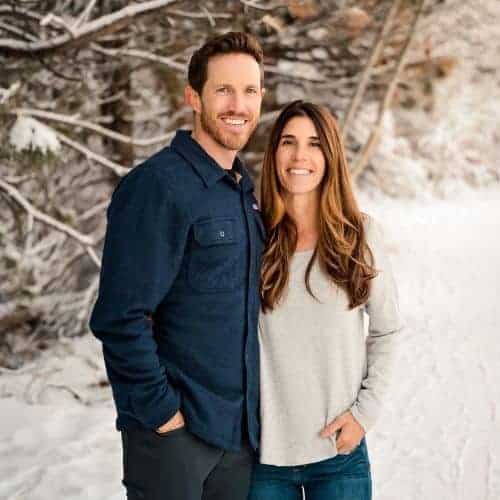
Matt and Aimee Balzer started Reno Running Company in 2011 with the mission of helping people achieve their active lifestyle goals. They have expanded their impact by acquiring Race178 and Reno Races, elevating the standard for race organization and community involvement. Their passion for running and community engagement doesn’t stop in Reno; they have recently become co-owners of Gold Country Run and Sport, further broadening their reach and influence in the running community. Known for their expertise in both retail and event management, the Balzers continue to inspire and connect runners across regions, fostering a vibrant and inclusive running culture.
Julie Fontani
Marketing Manager
Why do you enjoy being on the Race178 team?
Race178’s goal is happy runners and fun, safe events. Who doesn’t love to be surrounded by all that joy? I’m honored to be a part of this amazing team!
What is your favorite sports team?
Cheesehead forever! I’m a Green Bay Packers fan and any sports team one of my kids is on.
Hugger or not?
I’m a big hugger!
What is your favorite way to be active?
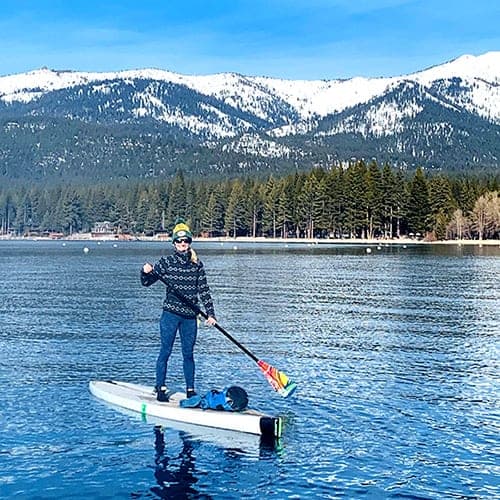
In my free time I enjoy doing anything outside. If the weather is bad I love to stay inside and snuggle with my dogs.
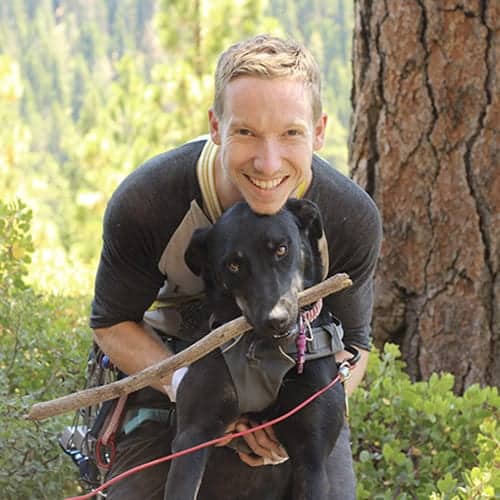
Leland Peterman
Race Director
When did you start working for Reno Running Company?
April 2023
How do you embody an active lifestyle? What are your active lifestyle goals?
I’ve got three key sports I pursue regularly: climbing, motocross, and running. I also coach a kids skateboarding program in the spring, summer and fall. My goals are to stay healthy and to always keep training fun!
Whats your best tip for runners?
Appreciate the hard days, learn to enjoy them!
What is one fun or quirky fact about you?
I’ve crossed the USA three times on my motorcycle for a total of 16,000 miles of amazing travels.
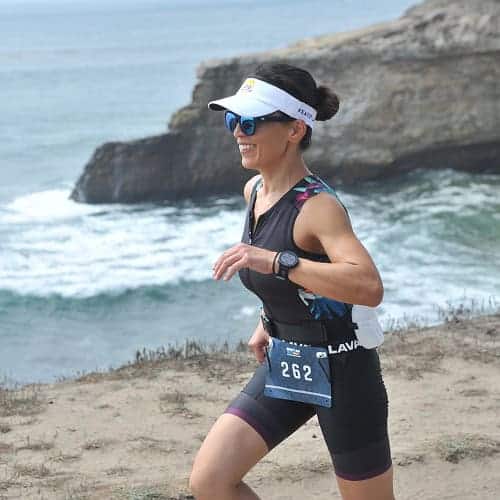
Naomi Gentle
Director of Race Operations
Where were you born/grow up?
Born in Osaka, Japan but grew up in San Diego, CA
Why do you enjoy being on the Reno Running Company Races team?
I get to work with an amazing team who are some of the kindest, most dedicated, and hardworking people I know. Even when things get busy, we still have a great time. It’s also incredibly rewarding to be part of our race participants’ fitness journeys and cheer them on along the way.
What do you do in your free time?
Run, continue running, run some more, swim, bike, hangout with family & friends, and cook!
What was your favorite TV show as a kid and why?
One of my favorite shows was an anime called Nippon Mukashibanashi, a Japanese folktale series. I loved how it used fairytales and fables to teach meaningful life lessons and encourage a strong moral compass.
Extended Race Team
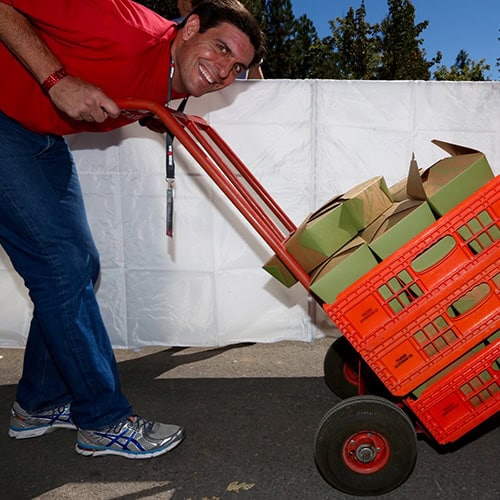
Mike Ginsburg
How long have you lived in the Reno-Tahoe area?
Our family came to Reno in 1914
Why do you enjoy being on the Reno Running Company Races team?
They make me feel like part of the family and that I bring value to the help I provide. Plus, I love helping with events!
What is your favorite way to be active?
Triathlons – Why suck at one Sport when you can suck at three
What superpower would you want and why?
HR won’t approve of this – But – X-ray vision
Hugger or not?
I don’t usually initiate the hug, ever since the HR complaint! But if it’s initiated, I will always accept a hug
Tina
How long have you lived in the Reno-Tahoe area?
I followed a boy up to Reno after graduating from college in San Diego, and have never looked back. I fell in love with the mountains, the four seasons, and all the fun that this region has to offer!
What is your favorite way to be active?
Tough question. I can’t pick just one! Between running, hiking, skiing, paddleboarding, CrossFit, and walking my two doggies, I’d say I’m never bored. And I’m always up for an adventure!
Hugger or not?
Definitely a hugger!!
What is your favorite cereal and why?
I love any granola-type cereals with nuts, and I tend to have it as a dessert instead of breakfast. Although I’m definitely a “healthy-leaning” cereal lover, once in a while, Lucky Charms hits the spot!
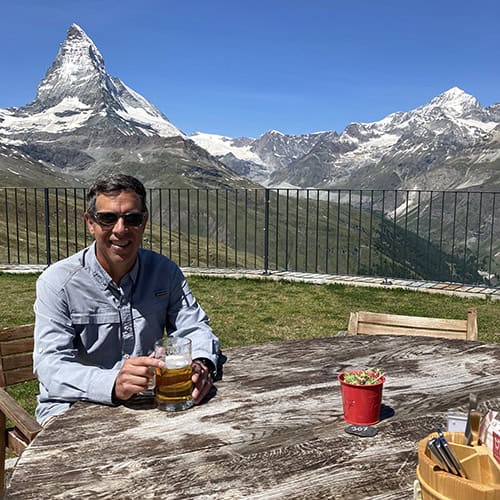
Jim
Where were you born/grow up?
My family left North Central Washington when I was 14 to spend my high school freshman year on the White Mountain Apache Reservation, Whiteriver, AZ. I finished high school in Carson City followed by graduation at the University of Nevada – Reno.
How long have you lived in the Reno-Tahoe area?
My family moved to Carson City in 1972. After graduating from UNR in 1980 I left for a short 12 year U.S. Army experience. I returned to Reno and don’t plan on leaving again.
Why do you enjoy being on the Reno Running Company Races team?
Running makes people happy and who doesn’t enjoy being around happy people? I look forward to seeing your smile as you run through my Reno-Tahoe Odyssey Exchange Point #9.
What do you do in your free time?
I enjoy hiking, swimming, kayaking, and riding my motorcycle.
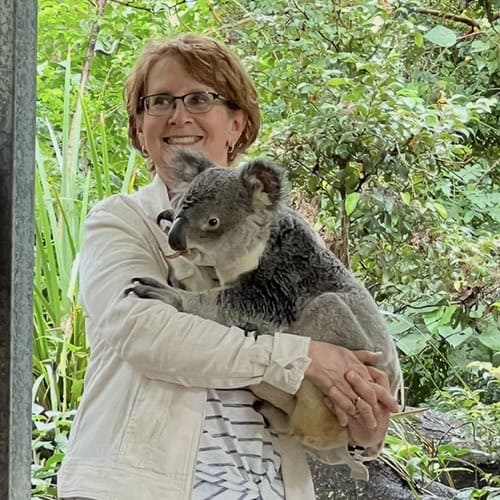
JoAnne Gipson
Where were you born/grow up?
I grew up in Pennsylvania and have lived in the Reno area for 45 years!
What is your favorite way to be active?
I started running late in life, doing a one-and-done marathon but still plugging away on the wonderful trails here.
Why do you enjoy being on the Reno Running Company Races team?
Being on the RRC team means having a great appreciation of our beautiful area with those that love the outdoors by running, walking or simply being a part of our activities.
What do you do in your free time?
My free time is occupied with traveling! Only have 179 more countries to go, and a million more pictures to take.